×
Login Register
Home › Courses › AI-Enabled Internal Audit™ Certificate Program

AI-Enabled Internal Audit™ Certificate Program

AI-Enabled Internal Audit™ Certificate Program
♙

Level
beginner

⏱

Duration
50 MCQs, 90 Minutes

◈

Format
Self-Paced Online

🎖

Certification
AI CERTs®

Self-Paced Online

USD $ N/A

Instructor-Led Online

At a Glance: Course + Exam Overview

Our training approach is human‑centred and outcomes‑driven. We focus on what learners can apply confidently.

Program Name
AI-Enabled Internal Audit™ Certificate Program
Prerequisites
    • General understanding of internal audit concepts and the audit lifecycle is helpful
    • No prior AI experience is required
    • Basic familiarity with everyday digital tools is helpful
    • No coding background is required
    • Desire to apply AI responsibly and effectively across internal audit activities and industry contexts
Exam Format
50 questions, 70% passing, 90 Minutes

What You'll Learn

AI Across the Audit Lifecycle

Apply AI across risk assessment, audit planning, continuous monitoring, fieldwork, evidence analysis, reporting, and follow-up.
Audit-Relevant AI Techniques

Use machine learning, natural language processing, generative AI, and predictive analytics for audit-relevant tasks.

Validation, Data Quality, and Professional Skepticism

Validate AI-generated outputs, identify errors and hallucinations, assess data quality, maintain traceable evidence, and document AI-assisted work so it remains reviewable and repeatable.

Responsible AI and Governance

Apply ISO/IEC 42001, NIST AI RMF, and the EU AI Act within an assurance context, with attention to ethics, privacy, confidentiality, bias mitigation, and human accountability.

Industry Application and Audit Leadership

Adapt AI-enabled audit techniques across six major industry contexts, coordinate assurance across the three lines in line with Standard 9.5, and communicate AI-driven insights to audit committees and boards.
Certification Modules

Module 1: Foundations of AI in Internal Audit

  1. 1.1 What AI Is (and Is Not) for Internal Audit
  2. 1.2 The AI Technology Landscape for Auditors
  3. 1.3 How AI Is Reshaping the Profession and the Global Internal Audit Standards
  4. 1.4 Ethics, Bias, and Auditor Responsibilities with AI
  5. 1.5 The AI Maturity Spectrum: From Data Analytics to Autonomous Agents
  6. 1.6 Building Your Personal AI Toolkit for the Internal Audit Function

Module 2: AI-Powered Audit Execution

  1. 2.1 AI for Risk Assessment and Audit Planning
  2. 2.2 Continuous Auditing and Monitoring with AI
  3. 2.3 AI-Assisted Workpaper Documentation and Evidence Analysis
  4. 2.4 NLP for Contract, Policy, and Document Review
  5. 2.5 Prompting for Audit Tasks (Risk Identification and Control Testing)
  6. 2.6 Refining AI Outputs for Accuracy and Relevance
  7. 2.7 Identifying and Correcting AI Errors and Hallucinations
  8. 2.8 Documenting AI-Assisted Work to Quality Standards

Module 3: Data, Quality, and Professional Skepticism

  1. 3.1 Evaluating AI Output: When to Trust, When to Probe
  2. 3.2 Data-Quality Fundamentals for AI-Augmented Audit
  3. 3.3 Documenting AI-Assisted Work for Quality Assurance
  4. 3.4 Managing Over-Reliance and Preserving Human Judgment
  5. 3.5 The Regulatory and Standards Landscape Governing AI in Assurance

Module 4: Industry Vertical Audit

  1. 4.1 Financial Services: Credit Risk, Fraud Detection, and Compliance
  2. 4.2 Healthcare: Operations, HIPAA Compliance, and Revenue-Cycle Integrity
  3. 4.3 Manufacturing and Supply Chain: Vendor Audits and ESG Assurance
  4. 4.4 Technology and Cybersecurity: IT Controls, AI Systems, and Third-Party Risk
  5. 4.5 Government and Public Sector: Compliance, Grants, and Accountability
  6. 4.6 Energy and Utilities: Resilience and Environmental Compliance
  7. 4.7 Translating AI Audit Methods Across Sectors

Module 5: AI in Action – Practitioner Use Case Labs

  1. 5.1 Use-Case Scenarios: Fraud, IT Controls, Vendor Compliance, and ESG
  2. 5.2 Prompt Engineering for Audit Tasks
  3. 5.3 Peer Review of AI-Assisted Workpapers
  4. 5.4 Capstone Project 1: Build a Continuous Audit Exception-Review App Using Replit
  5. 5.5 Capstone Project 2: Generate and Validate an AI-Assisted Audit Checklist Using Audit Now

Module 6: Leading AI-Enabled Audit Functions

  1. 6.1 AI Adoption Strategy, Tools, and Governance Frameworks
  2. 6.2 Building a Team AI Strategy: Upskilling, Tools, Governance
  3. 6.3 Managing Change, Resistance, and Stakeholder Expectations
  4. 6.4 Coordinating AI-Enabled Assurance Across the Three Lines in line with Standard 9.5, Coordination and Reliance
  5. 6.5 Communicating AI-Driven Insights to Audit Committees and Boards

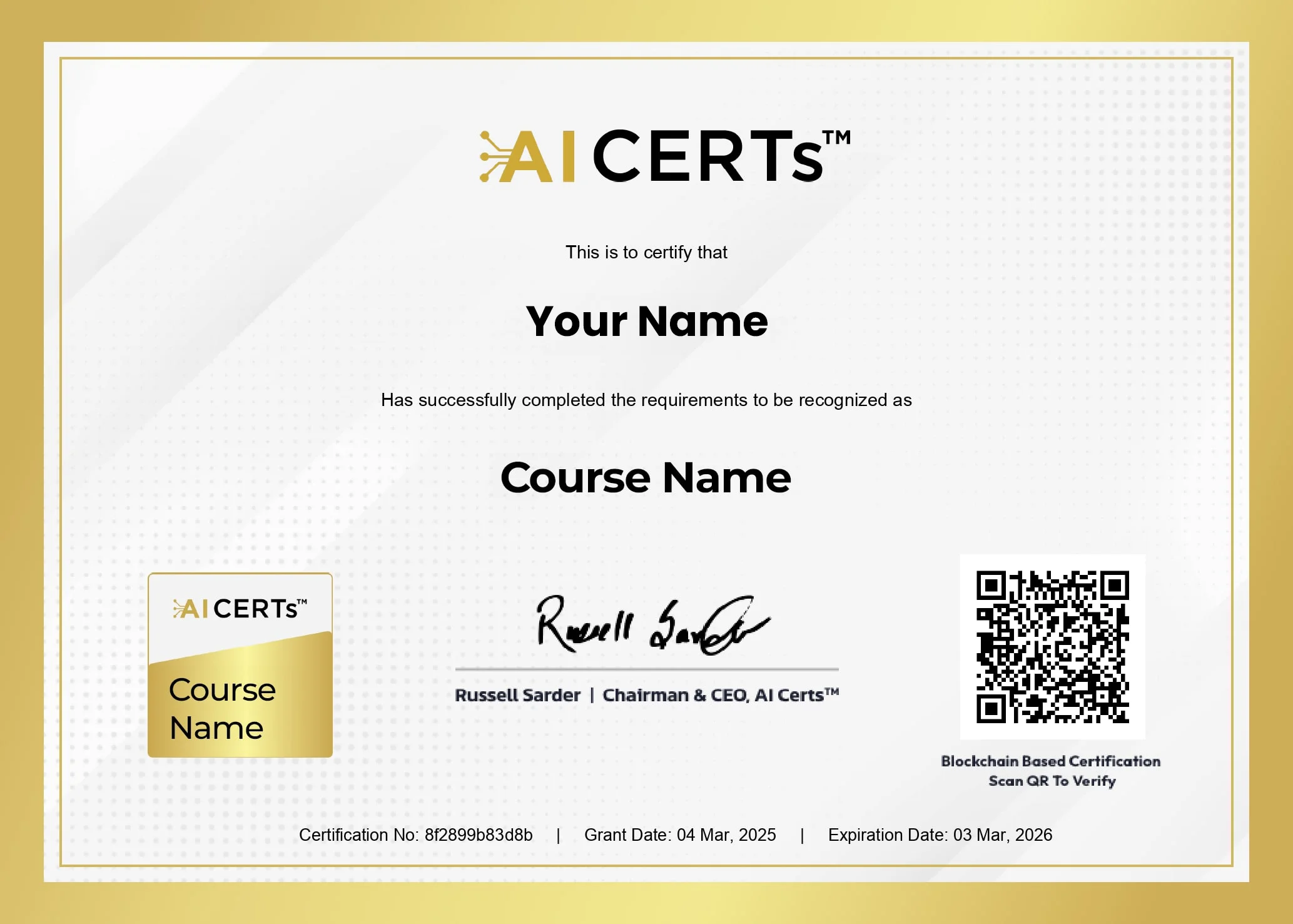
Finish the course and get certified

certificate

Industry Opportunities

Opportunity Image

Internal Auditor

Applies practical AI workflows across planning, fieldwork, evidence validation, documentation, and reporting.

Opportunity Image

Staff or Senior Auditor

Uses AI-enabled approaches to support audit execution while maintaining professional skepticism and evidence quality.

Opportunity Image

Audit Manager

Oversees AI-assisted audit work, reviewability, repeatability, and responsible use across the audit lifecycle.

Opportunity Image

Internal Audit Director

Leads AI-enabled methodology, governance, and capability building across the internal audit function.

Opportunity Image

Chief Audit Executive

Guides AI-enabled assurance strategy, governance, capability building, and board reporting.

Opportunity Image

QAIP or Audit Methodology Leader

Reviews AI-assisted workpapers, documentation quality, and conformance.

Opportunity Image

Audit Committee or Oversight Leader

Uses AI literacy to challenge governance, understand AI-related risk, and interpret assurance results.

Opportunity Image

Risk, Compliance, Governance, and Assurance Professional

Works with internal audit using a shared language for AI-enabled assurance.

Frequently Asked Questions

Can I apply what I learn in this course to real-world internal audit scenarios immediately?
Yes. The program uses practical AI workflows, case-based learning, hands-on exercises, practitioner scenarios, and capstone projects covering audit planning, fieldwork, evidence validation, documentation, reporting, compliance assessment, and audit workflow prototyping.
What makes this program different from a general AI course?
The program is developed in collaboration between The Institute of Internal Auditors (The IIA) and AI CERTs and is focused specifically on applying AI across the internal audit lifecycle. It is aligned with the Global Internal Audit Standards and incorporates ISO/IEC 42001, NIST AI RMF, and the EU AI Act while emphasizing professional skepticism, evidence quality, confidentiality, documentation discipline, and human accountability.
What type of projects or activities will I work on?
Hands-on activities include using AI to understand responsible AI in internal audit, building an AI-powered audit execution reference pack, verifying AI-generated audit conclusions, conducting technology compliance and Shadow AI readiness assessments, building a continuous audit exception-review app, generating and validating an AI-assisted audit checklist, and building an AI governance audit checklist and executive audit report.
Which tools are covered?
The approved tools and hands-on labs use ChatGPT, NotebookLM - Google, Julius AI, Baltum AI, QAIZEN Shadow AI, Replit AI, Audit Now AI, and Template.net.
What is the exam format?
The exam includes 50 multiple-choice / multiple-response questions, lasts 90 minutes, requires a 70% passing score (35/50), and is delivered as an online AI-proctored exam.
How does this program support professional growth in internal audit?
It builds practical capability in AI-enabled audit workflows, validation, data quality, professional skepticism, governance, industry-specific application, and coordination across the three lines. It also prepares professionals to communicate AI-driven insights to audit committees and boards and to support responsible AI adoption within audit functions.

Prerequisites

  • General understanding of internal audit concepts and the audit lifecycle is helpful
  • No prior AI experience is required
  • Basic familiarity with everyday digital tools is helpful
  • No coding background is required
  • Desire to apply AI responsibly and effectively across internal audit activities and industry contexts

Exam Details

Duration

90 Minutes

Passing Score

70%

Format

50 multiple-choice/multiple-response questions

Exam Blueprint

Foundations of AI in Internal Audit 18%
AI-Powered Audit Execution 22%
Data, Quality, and Professional Skepticism 16%
Industry Vertical Audit 14%
AI in Action - Practitioner Use Case Labs 14%
Leading AI-Enabled Audit Functions 16%
Self-Paced Online